


Pieter de Monchy - Relief The Duet 1985
Pieter de Monchy - Relief The Duet 1985
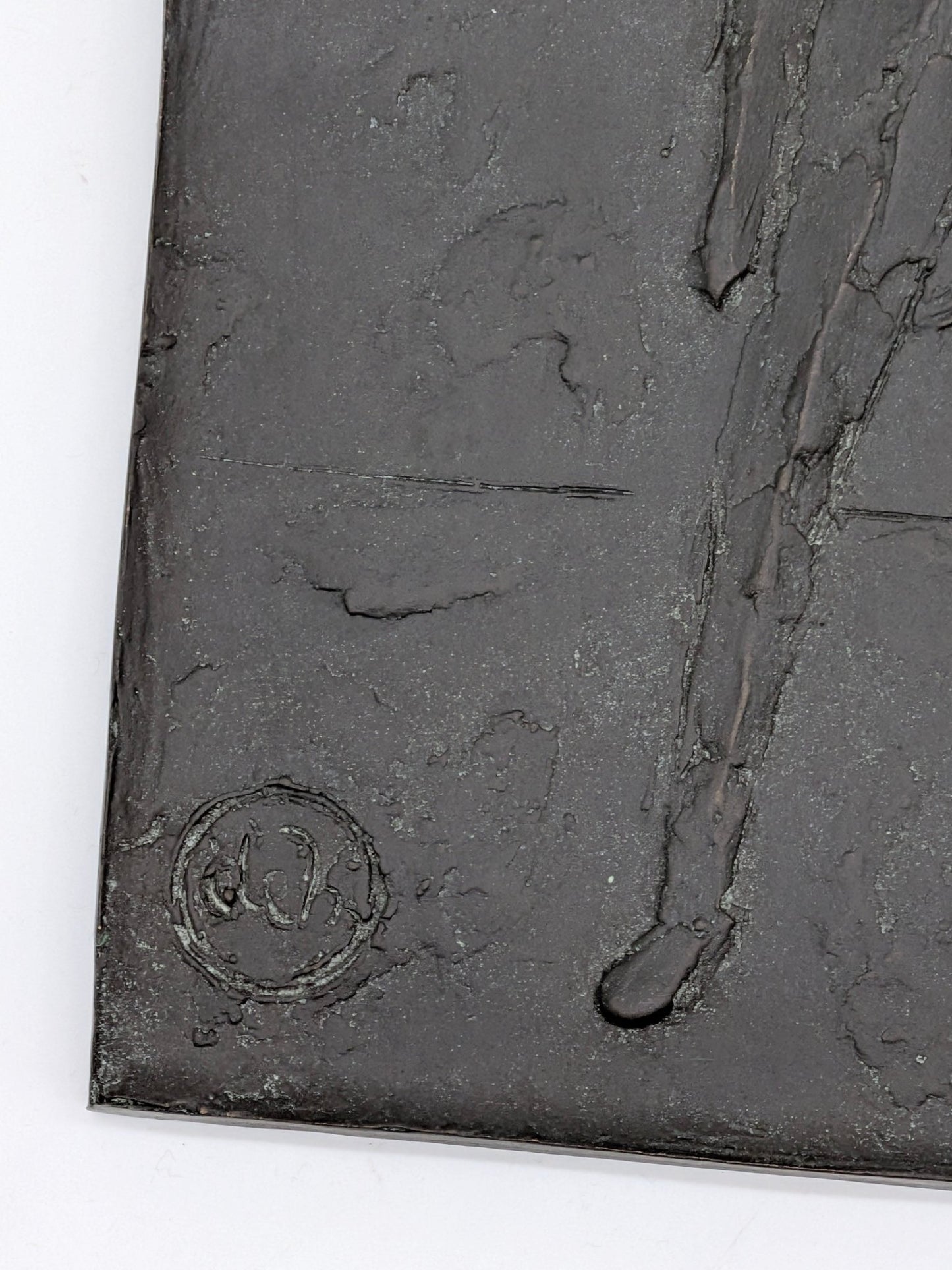
Signed lower left and documented (1985).
This bronze relief by Pieter de Monchy , titled "The Duet" (1985), depicts two musical figures seemingly connected in a harmonious exchange. The gently raised lines suggest movement and rhythm, making it seem as if the music flows softly through the bronze's surface. The subtle modeling lends the scene an intimate and poetic atmosphere, with the focus on the interaction rather than on detail.
The dark patina deepens the shadows and accentuates the contours of the figures, making the composition clear and balanced. The simplicity of the forms leaves room for expression and interpretation, ensuring the relief remains both visually and emotionally accessible.
The Duet is an atmospheric and musical work of art that elegantly captures the power of collaboration and human connection. A remarkable piece that effortlessly blends harmony, rhythm, and tranquility, it truly shines in a variety of interiors.
Couldn't load pickup availability
- Stel een vraag over dit werk
- Free Home Delivery ✅
Dimensions
Dimensions
30 cm long x 24 cm wide
Material
Material
Bronze
Weight
Weight
3.15 kg

About the artist: Pieter de Monchy
Pieter de Monchy (1916–2011)was a Dutch sculptor known for his tranquil figurative bronzes in which simplicity, emotion, and human dignity are central. Born in The Hague, he developed his style in the first half of the twentieth century within the tradition of classical modeling and refined reduction. De Monchy created a recognizable style with soft lines, rounded volumes, and a restrained appearance, giving his sculptures a serene and timeless atmosphere. His sculptures often depict human figures in calm, tranquil poses, where the essence of gesture and body language is more important than outward detail. He also created animal figures that exude the same tranquility and harmony. The subtle patinas and meticulous finishing emphasize the precision of his work. De Monchy's oeuvre is valued for its poetic simplicity and his ability to achieve maximum expression with minimal means. He is considered a key representative of Dutch figurative sculpture of the twentieth century, and his sculptures are included in numerous private and public collections.